
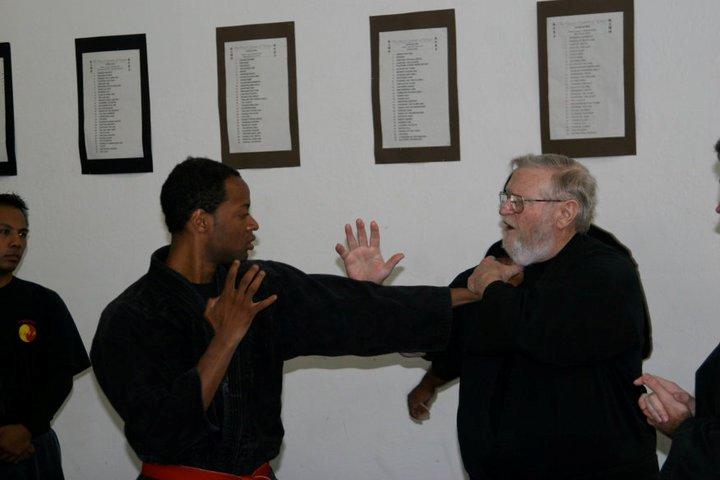
In the back of your mind, when you’re formatting you constantly keep track of all the little mistakes that you’re making. This is even more true when you’re an instructor.
I’d imagine it’s like teaching anything else in the sense that you have to be on top of your game. There isn’t any room for error because the material being taught could one day be the difference between life or death for our students; something that has happened on more than one occasion. I know students of all ages and walks of life that (unfortunately) have had to put their skills to use.
I say unfortunately because contrary to popular belief, the last thing as a martial-artist I want to do is fight. On the face of it, that comment sounds ridiculous. Why spend all that time practicing and teaching if you have no intention of using it? To that I say what my old squad leader would tell us during training exercises: “You pray for peace, but you train for war.”
When I first started training, I was eager and ready to test my newly acquired skills. While I totally knew that fighting other than for self-defense is strictly forbidden, you kind of want that one person to test you, to throw that one crazy left hook so you cold find out just how hard you can chop somebody in the neck with Japanese Sword. Better yet, a firm two hand choke from the front just so you can see if you can get thru all of Fang of the Cobra before he hit’s the ground. But as time grew on, and I watched my instructor and the instructors around me, my perspective started to change. It really came together after a few years of teaching. It was during this change in my thinking when I had a student ask me a question about kenpo that forever changed the way I looked at what I was teaching.
After a particularly amped adult group class, I proceeded to the break room to grab some water. One of our newer students stopped me; thanking me for a great class but wanted to know if I could answer one small question for him.
“This stuff is great, I have no doubt it works and I don‘t mean to be rude but why is it so brutal? Is all of that really necessary?”
I paused for a second which shocked me because normally I’m quick on my feet. Besides, I’ve been teaching for several years now and have experience answering certain questions but I had never had someone flat out ask me something like that at the time.
By then several other students-curious to know my answer-had gathered. I quickly composed myself gave a sharp tug on my belt and began to explain that at the time of it’s creation and real world application, people wore armor that needed to be penetrated where it could and subverted where it couldn’t. Thrusting kicks to the knees and vicious eye gouges are all necessary tools of war when dealing with an armored foe. While it is true that in our modern era, people aren’t walking around (normally that is) with body armor on, at least not the type we’re talking about, that doesn’t eliminate the need for dealing with threats quickly and decisively now. I told them that if anything, look at it as you’re doing them a favor. By selecting techniques that allow one to end situations quickly and decisively, you effectively prevent anymore damage being done that doesn’t need to be. Necessary force if you will. Some of them looked at me with a “still confused” look on their faces, to which I replied:
“It is better to be judged by 12, than carried by six.”
When it comes down to it, I don’t want to be in a situation where I would have to use my training. No matter how good anyone is, there’s always someone better. I’m confident in my abilities but I’m not stupid, there’s no need to go looking for trouble. I don’t know anything more about my attacker than they do about me so why risk it? Besides that I don’t want to hurt people and I don’t want my students doing that either. Kenpo is about self-defense. When you have to use it then do so without reserve, mercy or abandon. I see it like pointing a firearm at someone: don’t have that barrel aimed if you’re not prepared to shoot and if you do, accomplish your task and be done with it.
It’s not about looking hard or being hard. If that’s the case then I better stop wearing Halo T-shirts in public. It’s about realizing the actual art in martial-arts while having a humble respect and commanding power over the martial part.
 Just my thoughts